
Willow Pattern
My family's favourite

June 2025
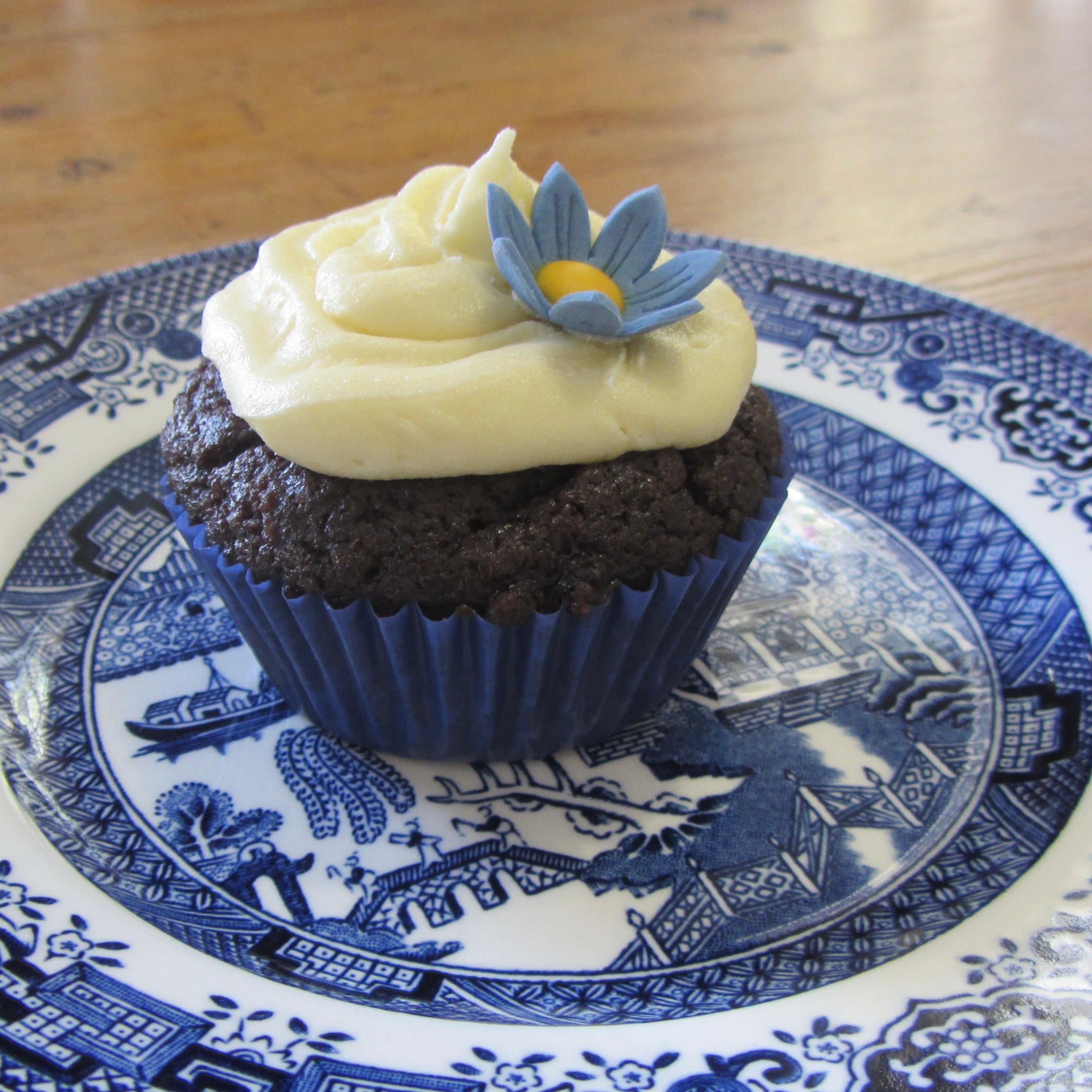
I’m going to my cousin’s wedding in Cornwall, England, next week.
My cousin’s dad is my Uncle John, my late mother’s younger brother. John has lived in Cornwall for decades.
John and Sue’s kitchen is always full – of cousins, dogs, homemade veg, and pastry in progress. The Aga keeps the kitchen warm in winter and the big kitchen table is where everyone eats and also where John writes lists and emails.
Next month, at that table, I’ll have more than one cup of tea. There might be a meat pie with peas and chips and, if I’m lucky, a scone with a big blob of jam and an even bigger blob of clotted cream. But I’d be happy with a bit of toast and Sue’s marmalade.
In this kitchen there’s a dresser and on that dresser there are Willow Pattern plates.
My mother had Willow Pattern plates on a dresser.
I have Willow Pattern plates too, and I couldn’t live without them.


Last week, at the Metropolitan Museum of Art in New York, I went to an exhibtion about Chinese porcelain and its impact on early modern Europe. It was called Monstrous Beauty: A Feminist Revision of Chinoiserie.
The exhibition was impressive. There were plates from as far back as the 1600s, and several from the 18th Century, when the craze for ‘chinoiserie’ among European women was at its peak.
The chinoiserie decorative style “encompassed Europe’s fantasies of the East and fixations on the exotic, along with new ideas about women, sexuality, and race”.
Juxtaposing the old pieces with works by contemporary woman artists, the show explored “how this fragile material shaped both European women’s identities and racial and cultural stereotypes around Asian women”.


There was no Willow Pattern at the chinoiserie exhibition.
Firstly, Willow Pattern is inspired by blue and white handpainted china from the Qing dynasty, but it’s an English design. In fact, it has an English countryside look to it.
Secondly, the Willow Pattern story was made up by English people.
Finally, Willow Pattern has never been handpainted. According to Wikipedia, the creation of Willow Pattern happened “when mass-production of decorative tableware, at Stoke-on-Trent and elsewhere, was already making use of engraved and printed glaze transfers … (transfer ware)”.
When Willow Pattern was created in the late 1700s, chinoiserie had already been fashionable for more than a century.
Willow Pattern was sometimes printed on bone china, but it was also printed on earthenware.
I’ve never heard anyone say Willow Pattern was chinoiserie for the middle class, but it sounds a bit like that, don’t you think?


Nonetheless, Willow Pattern was an instant hit, and the popularity of its design has endured.
Americans love it too. They call it Blue Willow.
It was the china of choice at William Randolph Hearst’s home in San Simeon, California. His Blue Willow consisted of gold-rimmed pieces purchased from Gilman Collamore, New York.
My uncle, my mum and I will use anyone’s Willow Pattern. My dinner plates are from Checkers. They can go in the dishwasher. I have old, china Willow Pattern pieces but they’re not for everyday. I have coffee cups and saucers that I use daily and won’t allow in the dishwater. My family would prefer I stuck to the Checkers mugs. But I don’t because I like my morning coffee in a cup and saucer. We have to agree to disagree.


Sometimes it’s not clear how a family thing became a family thing, but I think I know.
Nana – Uncle John and my mum’s grandmother – was a force of nature. One of the many impressive things she did in Middlesbrough, in Yorkshire – where she and the family lived – was to buy “job lots” at auction.
These were closed boxes of oddments. They would be marked “linens” or “kitchenware” – or “china”.
These boxes were like lucky packets. The auction house sorted items from deceased estates into loose categories and boxed them for sale. There was a chance “kitchenware” would contain silver, but there was no guarantee. It’s my firmly-held belief that our family’s first Willow Pattern pieces were drawn by Yorkshirewoman Nana, from a job lot box.
There’s a chance she got the good stuff. She might have unwrapped Spode from the late 1700s. Early Caughley, with gold trim, is very valuable now. But Willow Pattern by Staffordshire or Wedgwood would have been good too.
Most likely is that Nana found some common but attractive earthenware Willow Pattern.
Yorkshire is in the far north of England. Cornwall is far south. Staffordshire is in the West Midlands.
Willow Pattern brings them all together.
Staffordshire is where the early potteries were. From the early 1800s, the Willey family of Cornwall supplied the potteries with cobalt, a blue pigment.
Also, Cornwall china clay (kaolin) was “a vital material in the broader English pottery industry that produced these patterns”, according to Wikipedia.


When my children were little I read them a beautifully illustrated storybook that told the tale of the Willow Pattern.
The story is based on the Japanese fairy tale "The Green Willow" and other ancient fairy tales originating in China.
Beautiful Koong-se, the daughter of a wealthy Mandarin man, doesn’t want to marry the powerful duke her family has chosen for her husband. She is in love with her Chang, her father’s humble accounting assistant, who pens poems for her and meets her secretly in a pavilion separate from the main house. When they are discovered, Koong-se’s father builds a high fence around the house to keep the lovers apart.
The duke arrives by boat, with a box of jewels for Koong-se. It is agreed that the wedding will take place when the blossoms fall from the willow tree.
On the eve of the wedding, Chang disguises himself as a servant and slips into the house. The young couple flee with the jewels but the alarm is raised. They are chased over the bridge, past the weeping willow tree, by the girl’s father, with a whip. Koong-se and Chang make their escape on the water, travelling a long distance to a secluded island.
Many years later, the couple is happily settled. But soldiers sent by the girl’s father’s find the two. The men set fire to the couple’s house to drive them out. The pair opt to stay inside, where they burn to death. As their souls rise from the flames, the gods, saddened by their plight, turn Koong-se and Chang into a pair of birds. In the Willow Pattern design, the couple are represented by two swallows (or doves) in the centre of the plate.
To me, the story feels like a cross between Romeo and Juliet and a Hans Christian Andersen story. It also reminds me of the Ladybird fairytales I loved as a child: the bear in Snow White and Rose Red who was actually a prince; the curse on Sleeping Beauty; the trapped princess and the wicked elf in Rumpelstiltskin … For English people like my nana, my mum and myself, the novelty of the Willow Pattern story is not the tale, but how the whole tale is told in a single picture.
Yet Willow Pattern is an anglicised design. A picturesque bridge, a winding stream and mighty trees are all elements of English countryside pictures.


Willow Pattern is nostalgic, and a bit pleased with itself. Countries all over the world have blue and white beauty: China has its handpainted porcelain; Morocco has its tiles; Holland has its Delft pottery – and England has Willow Pattern.
When my children were at Bay Primary School, there was an art show. There wasn’t always an art show. I think there was a particularly motivated art teacher that year. I wish I knew her name.
Part of the show was a group of Willow Pattern pictures by Grade 6s and Grade 2s. The pictures had collage elements, drawing and painting. They results are so successful. Honestly, I wanted to buy half of them.
How interesting, that these children in South Africa in the 2010s were so inspired by this design (and the story too, I expect).


I don’t yet have a wedding present for my cousin and his bride.
I might have just talked myself into getting Willow Pattern.
Additional pics are screengrabs from The Internet
.
Have some, of course. Never knew a lot of this though. Thanks! (We are a little obsessed with Imari in our house...but also with little VIetnamese blue and white boxes and a set of REALLY OLD Rose Medallion which was brought back from China in the 1800's by a missionary relative I believe. It DEFINITELY doesn't go in the DW but I am so tempted sometimes....) Lovely story. Enjoy the clotted cream.
Nice read, Daisy. Now I know something new. Thanks.